
Our operating model has two halves. The Prosable Operations Engine is the operating layer around the workflow: business context, platform reliability, exception handling, and the learning cycle that turns operating data into better rules. The Human + AI Delivery Model matches judgment to case type: AI workers resolve what the rules cover, human specialists resolve what requires interpretation, and domain experts rewrite the rules based on what the operation keeps surfacing.
Take the three-way match failure from that finance workflow. The Context Layer already holds the business rules for matching, so the Exception Desk knows this is a partial-shipment case, not a fraud flag. An L2 specialist with finance operations experience resolves it: hold pending receipt, not split, not override. That resolution feeds the Learning Loop, and the next partial-shipment mismatch clears at L1 without escalation. One cycle, and the operation just got cheaper per invoice.
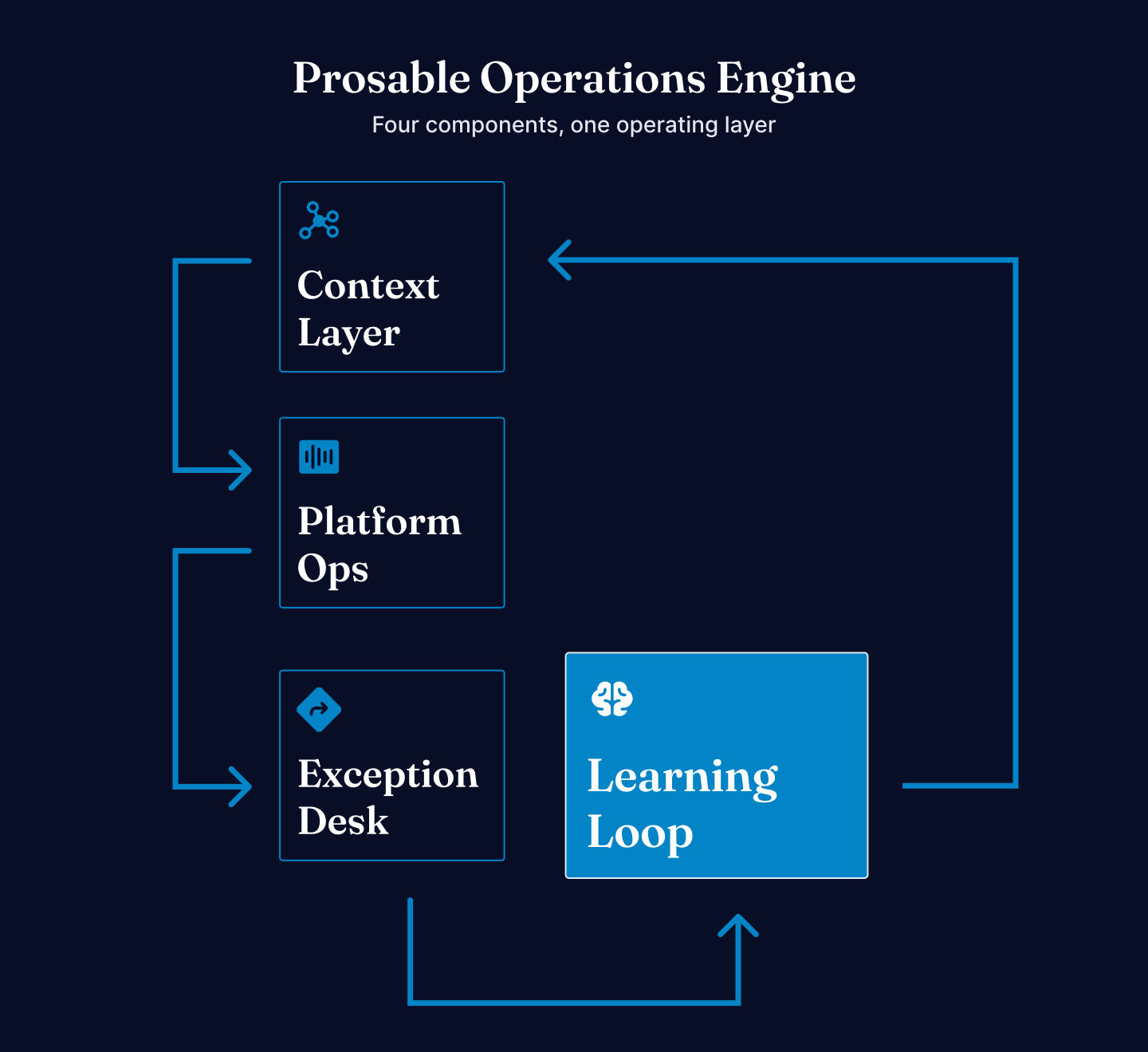
That cycle is the mechanism. The Engine has four components (Context Layer, Platform Ops, Exception Desk, and Learning Loop) and what makes them valuable is how each one’s output feeds the next. Without business context, the Exception Desk drowns in avoidable cases. Without the Exception Desk capturing resolution patterns, the Learning Loop has nothing to learn from. Without the Learning Loop rewriting rules, the same exceptions keep reaching the queue at the same rate.
Every decision, resolution, and exception outcome gets captured. That traceability is what makes the operation auditable and defensible when a regulator, an operations leader, or an executive asks how a decision was made. And because the data accumulates, the economics shift: exception rates fall, resolution times compress, and escalation frequency drops cycle over cycle. The operation gets less expensive per unit of throughput as it matures, not more.
